Travel
Severna Dakota: Exploring the Meaning, Geographic Confusion, and Cultural Interest Behind the Search Term

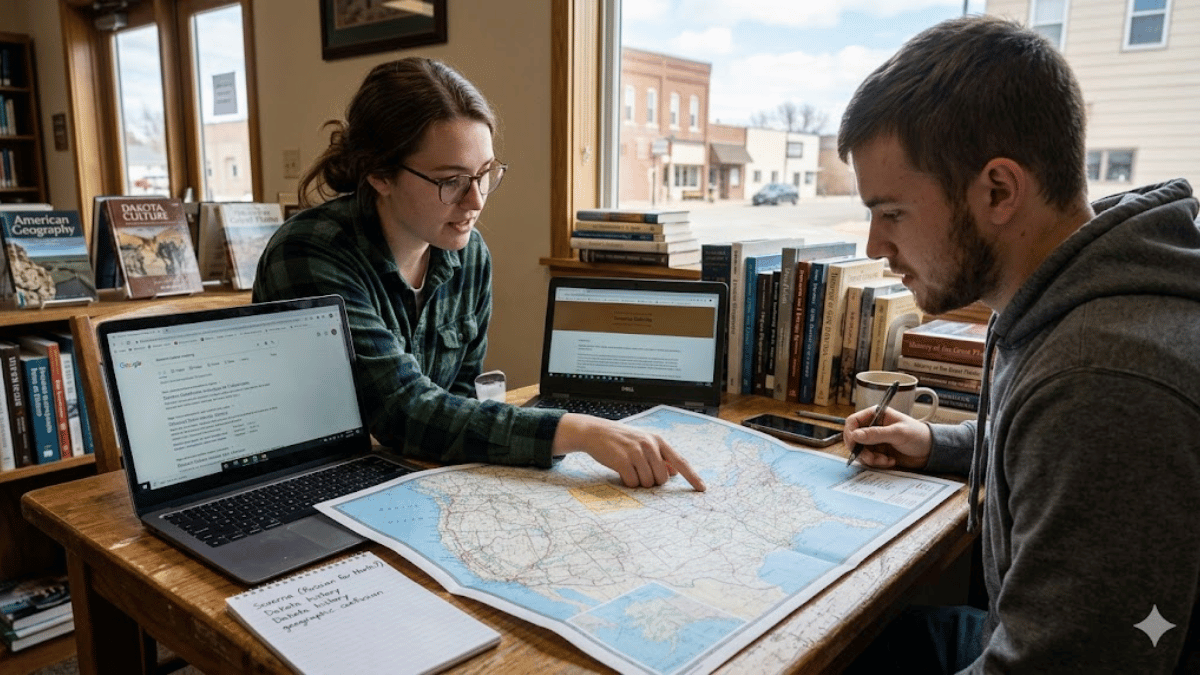
The keyword “Severna Dakota” has generated curiosity among internet users due to its unusual phrasing and possible connection to the American Midwest. While the term itself is not officially recognized as a U.S. state or geographic entity, it appears to be associated with either a linguistic variation, a translation-related phrase, or a mistaken interpretation involving the states of North Dakota and South Dakota. In many cases, search behavior surrounding uncommon geographic keywords reflects how global internet users interact with regional names, translation systems, historical references, and digital content indexing.
The Dakotas hold an important place in the history, geography, economy, and cultural identity of the United States. Located in the northern Great Plains region, North Dakota and South Dakota are known for their vast landscapes, agricultural industries, Native American heritage, national parks, wildlife, energy production, and small-town Americana. Together, these states represent a unique blend of frontier history and modern economic development.
The phrase “Severna Dakota” may also have linguistic roots. In several Slavic languages, including Serbian, Croatian, Czech, and Slovak, the word “severna” translates to “northern” or “north.” As a result, “Severna Dakota” may effectively mean “North Dakota” when translated or adapted into another language. This possibility explains why the term appears in online searches, translated content, travel discussions, and international references.
Understanding the significance of Severna Dakota therefore requires more than simply interpreting the phrase literally. It involves examining language adaptation, regional geography, travel interest, digital search behavior, and the broader cultural importance of the Dakotas in American identity. In an increasingly connected internet environment, localized names frequently become global search terms as users interact with translated maps, travel platforms, educational materials, and multilingual content.
The topic is especially relevant because global audiences now consume location-based information through search engines, AI tools, travel websites, and social media platforms. Variations in spelling, translation, and pronunciation often create emerging keywords that reflect cross-cultural engagement with geographic destinations. Severna Dakota fits within this broader pattern of digitally transformed geographic terminology.
| Aspect | Details |
|---|---|
| Keyword | Severna Dakota |
| Likely Meaning | North Dakota or a translated Dakota reference |
| Category | Travel |
| Geographic Region | United States Great Plains |
| Related States | North Dakota and South Dakota |
| Language Influence | Slavic translation for “Northern Dakota” |
| Tourism Relevance | National parks, wildlife, history |
| Economic Importance | Agriculture, energy, tourism |
| Cultural Significance | Native American heritage and frontier history |
| Search Interest | Geography, travel, translation, regional identity |
Understanding the Meaning of Severna Dakota
The phrase “Severna Dakota” likely originates from linguistic translation rather than representing an official geographic location. In several Eastern European and Slavic languages, the term “severna” translates to “northern.” When combined with “Dakota,” the phrase effectively refers to North Dakota.
This translation phenomenon is common across the internet. Geographic locations often appear in localized language forms depending on the region, search engine indexing system, or translation platform being used. International users searching for American destinations may therefore encounter translated versions of state names that later become searchable keywords in their own right.
The Dakotas themselves derive their names from the Dakota people, one of the Native American Sioux tribes historically connected to the northern plains region. The word carries deep historical and cultural significance that predates the formation of the modern U.S. states.
North Dakota officially became a state in 1889 alongside South Dakota. Although they share historical roots and geographic proximity, the two states developed distinct economic identities, political cultures, and tourism industries over time. The use of translated or modified forms such as Severna Dakota highlights how international audiences interact with American geography through multilingual digital systems.
Another reason the term may appear online is due to automated translation software. Machine translation tools often convert geographic labels into localized formats, especially on mapping services, travel websites, or international news platforms. Users encountering these translated terms may later search them independently, increasing search engine visibility.
Translation and Global Search Behavior
Modern search engines process billions of multilingual queries daily. Geographic names are among the most commonly translated search terms because users frequently seek travel information, maps, educational content, or regional history across language barriers.
As digital globalization expands, localized versions of geographic names increasingly appear in international search results. Severna Dakota represents this growing intersection between language adaptation and online discovery.
Why Geographic Variations Matter
Keyword variations matter because search engines interpret multiple spellings, translations, and localized terms as connected concepts. Publishers, travel companies, and educational websites often optimize content for alternative geographic terminology to improve accessibility for international audiences.
North Dakota: Geography and Natural Landscapes
If Severna Dakota refers to North Dakota, the state is one of the most geographically distinctive regions in the United States. Located in the northern Great Plains near the Canadian border, North Dakota is characterized by expansive prairies, rolling hills, river valleys, and rugged badlands landscapes.
The western portion of the state is especially famous for Theodore Roosevelt National Park, a region known for dramatic rock formations, wildlife habitats, and historical significance connected to President Theodore Roosevelt. The park attracts visitors interested in hiking, camping, photography, and outdoor recreation.
Eastern North Dakota differs geographically, featuring fertile farmland and flatter terrain shaped by ancient glacial activity. Agriculture dominates much of this region, contributing significantly to the state’s economy through wheat, soybeans, corn, and sunflower production.
The Missouri River also plays a major role in North Dakota’s geography and economic development. It supports water resources, hydroelectric infrastructure, recreation, and wildlife ecosystems across the state.
North Dakota experiences distinct seasonal variations. Winters can be extremely cold with heavy snowfall, while summers are often warm and suitable for agriculture and tourism. These climatic conditions shape local lifestyles, economic activities, and cultural traditions.
Theodore Roosevelt National Park
One of the most iconic destinations in North Dakota is Theodore Roosevelt National Park. The park preserves large sections of badlands terrain and supports wildlife including bison, wild horses, elk, prairie dogs, and deer.
The park is historically important because Theodore Roosevelt credited the region with shaping his conservation philosophy and environmental policies.
The Great Plains Ecosystem
North Dakota forms part of the larger Great Plains ecosystem, one of North America’s most historically significant environmental regions. Prairie grasslands support agriculture, wildlife habitats, and ecological diversity that remain central to the region’s identity.
South Dakota and Its Connection to the Dakotas Identity
Although Severna Dakota most likely refers to North Dakota, understanding the Dakotas requires examining South Dakota as well. The two states share historical roots and cultural similarities while maintaining distinct identities.
South Dakota is internationally recognized for landmarks such as Mount Rushmore National Memorial and Badlands National Park. These destinations attract millions of tourists annually and contribute heavily to the state’s economy.
The Black Hills region of South Dakota holds major cultural and spiritual importance, particularly for Native American communities including the Lakota Sioux. The area also supports tourism, outdoor recreation, and historical preservation.
Like North Dakota, South Dakota relies heavily on agriculture, though tourism plays a comparatively larger economic role. Ranching, grain production, and livestock industries remain central to the state’s economy.
The shared Dakota identity reflects historical, linguistic, and indigenous roots that connect both states despite their administrative separation.
Shared Historical Origins
North Dakota and South Dakota were originally part of the Dakota Territory before statehood in 1889. The region’s settlement history includes Native American cultures, westward expansion, railroad development, and frontier migration.
This shared territorial history explains why international audiences sometimes perceive the Dakotas as a single cultural region.
Tourism and Regional Branding
The Dakotas collectively market themselves through themes involving nature, adventure, frontier heritage, and Americana. Road trips through the northern plains remain popular among travelers seeking scenic landscapes and historical experiences.
Native American Heritage and Cultural Importance
The Dakotas possess deep Native American historical significance. Indigenous communities inhabited the northern plains for centuries before European settlement and continue shaping regional identity today.
The Dakota, Lakota, and Nakota peoples are collectively associated with the Sioux Nation. Their cultures, traditions, languages, and histories remain central to understanding the region’s heritage.
Many important historical events connected to Native American history occurred within the Dakotas. These include treaty negotiations, conflicts during westward expansion, and cultural preservation movements that continue influencing political and social discussions.
Reservations across North and South Dakota support indigenous communities maintaining cultural traditions while navigating modern economic and social challenges. Powwows, art traditions, language preservation programs, and tribal governance systems remain active components of regional culture.
Cultural Preservation Efforts
Tribal organizations and educational institutions work to preserve indigenous languages, oral histories, and traditional practices. These efforts are increasingly supported through digital archives, museums, and cultural tourism initiatives.
Historical Significance
The Dakotas occupy an important place in American history because they represent both frontier expansion and indigenous resilience. Understanding the region requires acknowledging these interconnected historical narratives.
Economic Importance of the Dakotas
The Dakotas play a substantial role in the American economy despite relatively small populations. Agriculture remains one of the region’s dominant industries, with wheat, soybeans, corn, cattle, and sunflower production contributing significantly to national food systems.
North Dakota also became a major energy-producing state due to the Bakken oil formation. Oil extraction dramatically transformed parts of the state’s economy during the shale energy boom, attracting investment, infrastructure development, and workforce migration.
Renewable energy is another growing sector. The Dakotas possess strong wind energy potential due to open plains landscapes and favorable weather conditions. Wind farms increasingly contribute to regional electricity generation and economic diversification.
Manufacturing, transportation, and technology sectors also continue expanding. Rural broadband initiatives and digital infrastructure improvements aim to support economic modernization across smaller communities.
Agriculture and Food Production
The Dakotas are among America’s leading agricultural regions. Fertile soils and large-scale farming operations support both domestic food supply chains and international exports.
Modern agriculture in the region increasingly uses advanced technologies including GPS-guided equipment, precision farming systems, and automated irrigation management.
Energy Development
Energy development significantly influenced North Dakota’s economic growth over the last two decades. Oil, natural gas, and renewable energy projects created employment opportunities while reshaping infrastructure and population dynamics.
Tourism and Travel Experiences in the Dakotas
Tourism in the Dakotas focuses heavily on outdoor recreation, historical landmarks, scenic drives, wildlife observation, and cultural heritage experiences. Travelers often visit the region seeking less crowded natural destinations compared to more commercialized tourist areas.
Road trips are especially popular because the northern plains provide expansive scenery, historic small towns, and iconic American landscapes. National parks, monuments, and state recreation areas attract visitors interested in hiking, camping, photography, fishing, and wildlife viewing.
North Dakota’s tourism industry promotes themes of rugged beauty, frontier exploration, and outdoor adventure. South Dakota emphasizes monumental attractions alongside natural landscapes and cultural heritage sites.
The region also attracts international travelers interested in American history, indigenous culture, and western landscapes often portrayed in films, literature, and documentaries.
Outdoor Recreation
The Dakotas offer opportunities for hiking, boating, hunting, fishing, horseback riding, camping, and winter sports. Outdoor tourism contributes significantly to local economies and conservation initiatives.
Cultural and Historical Tourism
Museums, heritage centers, historical reenactments, and Native American cultural events help preserve and promote regional history. Visitors increasingly seek educational travel experiences connected to cultural authenticity and historical understanding.
Digital Search Trends and Geographic Curiosity
The appearance of keywords like Severna Dakota demonstrates how digital search behavior evolves in multilingual internet environments. Search engines increasingly process translated terms, localized spellings, and culturally adapted geographic references.
Users today often discover locations through AI systems, translation tools, social media videos, and recommendation algorithms rather than traditional atlases or textbooks. This creates new patterns of geographic curiosity and keyword visibility.
Travel influencers, online education platforms, and globalized media content further contribute to the spread of localized geographic terminology. A translated map label or foreign-language travel article can generate significant international search activity.
SEO professionals and travel publishers increasingly optimize content for multilingual geographic searches to reach broader global audiences.
AI and Translation Technology
AI-driven translation systems make geographic information more accessible globally. However, these systems also create alternative naming conventions that may appear unusual to native English speakers.
The Globalization of Travel Discovery
Digital platforms transformed how travelers research destinations. International audiences now explore American geography through localized interfaces and translated content ecosystems.
Conclusion
Severna Dakota is best understood as a translated or linguistically adapted reference likely connected to North Dakota and the broader Dakota region of the United States. While not an official geographic term in English, it reflects the growing influence of multilingual internet usage, digital search behavior, and globalized access to geographic information.
The Dakotas themselves remain culturally, historically, and economically important regions within the United States. From the dramatic badlands of North Dakota to the monumental landmarks of South Dakota, the region offers a rich combination of natural beauty, indigenous heritage, agricultural significance, and frontier history.
The emergence of keywords like Severna Dakota highlights how digital technology reshapes geographic understanding. Translation systems, AI-driven search engines, international travel content, and multilingual media platforms increasingly influence how users encounter and interpret place names around the world.
Beyond linguistic curiosity, the topic also demonstrates the enduring appeal of the Dakotas as destinations associated with wide-open landscapes, outdoor adventure, cultural depth, and historical significance. As global audiences continue exploring regional America through digital platforms, alternative geographic terminology will likely become even more common in international search ecosystems.
Ultimately, Severna Dakota represents both a linguistic phenomenon and a gateway into understanding one of America’s most distinctive regional landscapes. Whether approached from a travel, cultural, historical, or technological perspective, the keyword reflects the evolving relationship between language, geography, and digital discovery in the modern world.
Check Out More Interesting Stories!
FAQs
FAQ 1: What does Severna Dakota mean?
Severna Dakota likely refers to “North Dakota” in a Slavic language translation. The word “severna” commonly means “northern” or “north” in several Eastern European languages.
FAQ 2: Is Severna Dakota an official U.S. state?
No, Severna Dakota is not an official U.S. state. It is most likely a translated or localized variation associated with North Dakota.
FAQ 3: Why do translated geographic names appear in online searches?
Translated geographic names appear because search engines, translation tools, travel platforms, and multilingual websites adapt place names for international audiences, creating alternative searchable terms.
FAQ 4: What are the Dakotas known for?
North Dakota and South Dakota are known for agriculture, national parks, Native American heritage, scenic landscapes, wildlife, energy production, and historical landmarks such as Mount Rushmore.
FAQ 5: Which major attractions are located in the Dakotas?
Major attractions include Mount Rushmore National Memorial, Badlands National Park, and Theodore Roosevelt National Park, along with numerous cultural, historical, and outdoor recreation destinations.

Travel
Alhambra Palace Night Tour Attendance Revenue: Tourism Economics, Visitor Trends, and Cultural Impact
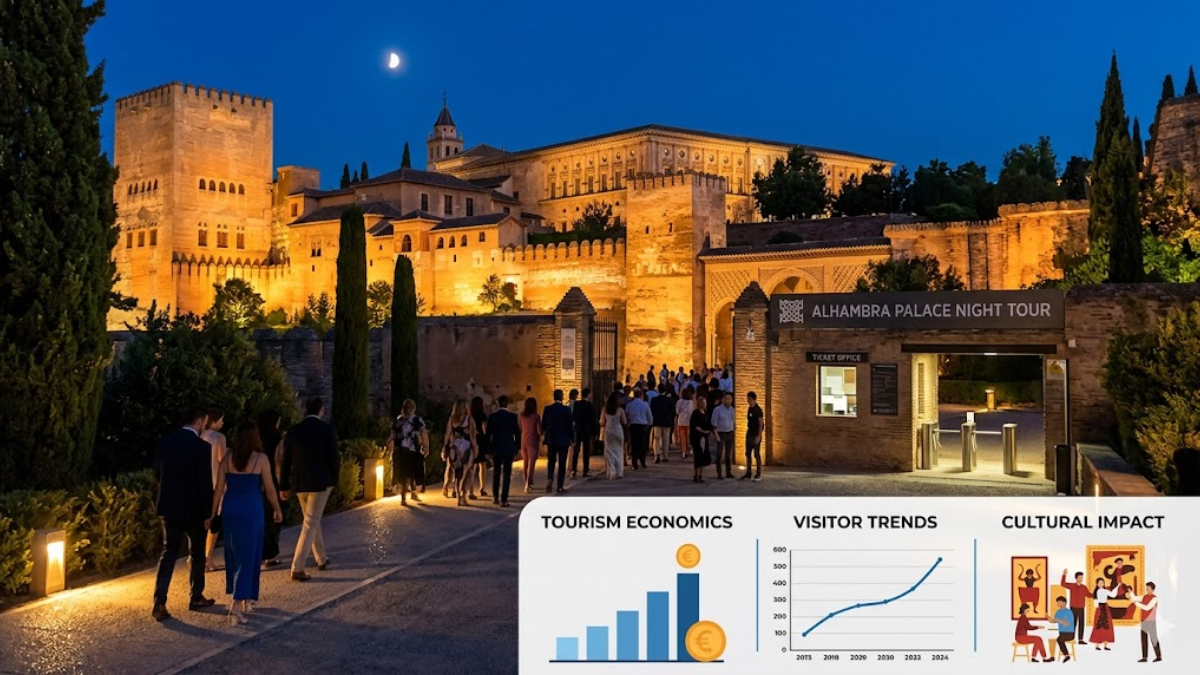
The Alhambra Palace in Granada, Spain, remains one of the most visited and culturally significant historic monuments in Europe. Famous for its Islamic architecture, Nasrid Palaces, Generalife gardens, and UNESCO World Heritage status, the Alhambra attracts millions of visitors annually. While daytime tourism traditionally dominates public attention, the Alhambra Palace night tour attendance revenue model has emerged as an increasingly important subject in cultural tourism analysis, visitor management, and heritage economics.
Night tours at the Alhambra provide a dramatically different experience compared to daytime visits. Illuminated courtyards, reflective pools, atmospheric gardens, and carefully controlled visitor numbers create an exclusive environment that many travelers consider more immersive and emotionally impactful. These tours have evolved into both a tourism product and a revenue-management strategy designed to balance preservation, visitor satisfaction, and financial sustainability.
Research from tourism analyses, cultural reporting platforms, and visitor management discussions indicates that the Alhambra’s evening tours contribute meaningful revenue despite representing only a small fraction of total annual attendance. Several industry estimates suggest that annual night tour revenue may range between €1 million and €12 million depending on pricing structures, premium guided packages, seasonal demand, and operational classifications.
The importance of night tourism extends beyond direct ticket income. Evening visits help reduce daytime congestion, extend visitor stays in Granada, support local hospitality businesses, and reinforce Spain’s position in premium cultural tourism markets. However, the system also raises questions about sustainability, capacity restrictions, UNESCO preservation standards, and long-term tourism management strategies.
As global tourism increasingly shifts toward experiential travel and premium after-hours attractions, the Alhambra’s night tour operations provide a valuable case study in how heritage sites can monetize exclusivity while attempting to preserve fragile historical environments.
| Aspect | Details |
|---|---|
| Location | Alhambra Palace, Granada, Spain |
| UNESCO Status | UNESCO World Heritage Site |
| Night Tour Focus | Nasrid Palaces and Generalife gardens |
| Estimated Annual Visitors | Around 2.7 million total visitors |
| Estimated Night Visitors | Approximately 100,000–150,000 annually |
| Ticket Price Range | Roughly €8–€19 depending on package |
| Estimated Night Revenue | Around €1 million–€12 million annually |
| Visitor Experience | Smaller groups, illuminated architecture |
| Main Economic Benefit | Premium cultural tourism revenue |
| Key Challenge | Preservation versus tourism demand |
Understanding the Alhambra Night Tour System
The Alhambra night tour system is fundamentally different from standard daytime tourism operations. Evening access is intentionally limited, highly regulated, and structured around preservation priorities. Unlike mass daytime tourism flows, night tours focus on smaller attendance groups and controlled scheduling.
The most famous evening experience involves nighttime access to the Nasrid Palaces, widely regarded as the architectural centerpiece of the Alhambra complex. Under carefully designed lighting conditions, visitors experience the palace environment in a quieter and more atmospheric setting than during daytime hours. The Generalife gardens also host selected evening visits during certain periods.
One reason night tours attract strong international interest is exclusivity. The Alhambra already operates near maximum annual visitor capacity. Reports indicate the monument functions close to UNESCO-related attendance thresholds, with annual visitor numbers approaching roughly 2.7 million people. Because daytime tickets often sell out months in advance, evening visits are perceived as premium alternatives.
The Patronato de la Alhambra y Generalife, the public institution responsible for managing the monument, controls visitor flows carefully to protect fragile historical spaces. Night tours therefore prioritize experience quality and conservation rather than maximizing attendance volume.
Tour operators and tourism economists increasingly view the Alhambra’s evening strategy as an example of “high-value low-volume tourism.” Instead of dramatically increasing visitor numbers, management focuses on generating greater value per visitor through exclusivity and specialized experiences.
Why Night Tours Feel Different
Night visits create a fundamentally different psychological experience for visitors. Lighting transforms the appearance of reflective pools, arches, mosaics, and carved ceilings.
Many travelers describe nighttime visits as:
- More intimate
- Less crowded
- More atmospheric
- Better for photography
- More emotionally immersive
This perception increases willingness to pay premium pricing.
Controlled Capacity and Preservation
Unlike commercial entertainment venues, the Alhambra cannot expand indefinitely. Preservation requirements heavily influence attendance policies.
The site’s management prioritizes:
- Structural conservation
- Visitor flow control
- Reduced overcrowding
- Environmental stability
- Long-term heritage protection
These restrictions directly shape night tour attendance and revenue models.
Attendance Statistics and Visitor Capacity
One of the most debated aspects of Alhambra Palace night tour attendance revenue involves the limited availability of precise official statistics. While total annual Alhambra attendance figures are publicly discussed frequently, separate detailed breakdowns for night tours are not consistently published independently.
However, multiple tourism analyses estimate that annual night tour attendance ranges between approximately 100,000 and 150,000 visitors. Seasonal variation significantly influences these numbers.
Peak attendance generally occurs during:
- Spring tourism season
- Summer evenings
- Autumn cultural travel periods
- Holiday tourism peaks
Lower attendance periods usually occur during colder winter months when weather conditions reduce evening tourism demand.
Reports discussing night tour operations commonly estimate that individual evening sessions accommodate around 350 to 500 visitors depending on scheduling structures and operational periods. These figures remain far below daytime attendance volumes, reinforcing the premium nature of the experience.
Capacity restrictions are partly linked to heritage management concerns. The Alhambra already experiences extremely high annual occupancy rates. Historical reporting from Granada media sources noted annual occupancy levels exceeding 98% capacity utilization. This leaves very limited room for large-scale attendance expansion.
The exclusivity created by restricted supply contributes significantly to perceived value. Visitors often view night tickets as scarce cultural experiences rather than ordinary tourist admissions.
Seasonal Tourism Patterns
Attendance fluctuates throughout the year based on:
- Climate conditions
- International travel demand
- School holidays
- Flight availability
- Tourism marketing campaigns
Spring and autumn are particularly strong due to comfortable evening temperatures.
International Visitor Demand
The Alhambra attracts visitors globally, with especially strong demand from:
- European tourists
- North American travelers
- Asian cultural tourism markets
- Luxury travel groups
- Photography-focused travelers
Night experiences appeal strongly to premium cultural tourism audiences.
Revenue Structure of Alhambra Night Tours
Revenue generation from Alhambra night tours comes from several interconnected sources rather than ticket sales alone. Standard admission pricing forms the core revenue stream, but premium experiences significantly increase overall earnings.
Ticket prices for night visits vary depending on:
- Tour type
- Guided or self-guided access
- Seasonal demand
- Package inclusions
- Visitor category
Several analyses estimate basic night tickets typically range between €8 and €13, while premium guided experiences may reach €15–€20 or more.
Although exact official revenue figures are not consistently published separately, tourism reports estimate annual night-tour-related revenue between approximately €1 million and €12 million depending on methodology and inclusions.
The wide range exists because some estimates count only direct ticket sales while others include:
- Guided tour commissions
- Audio guide rentals
- Hospitality partnerships
- Merchandise sales
- Transportation-related spending
- Local tourism spillover effects
One tourism analysis estimated that sold-out evening sessions can generate several thousand euros per night from admissions alone.
Importantly, the Alhambra operates under a public institutional model rather than purely commercial tourism management. Revenue generated by the Patronato is generally reinvested into:
- Restoration projects
- Structural conservation
- Security systems
- Visitor services
- Staffing
- Heritage maintenance
Premium Tourism Economics
Night tours function as premium cultural products. Unlike mass tourism tickets, they depend on:
- Scarcity
- Emotional experience
- Atmosphere
- Prestige
- Photography appeal
These characteristics allow higher per-visitor revenue.
Guided Tours and Upselling
Additional spending opportunities include:
- Licensed tour guides
- Audio equipment rentals
- VIP experiences
- Combined city tourism packages
- Hotel partnerships
These secondary services expand tourism-related economic impact.
Economic Impact on Granada and Local Tourism
The Alhambra’s night tourism economy extends well beyond monument ticket sales. Evening tourism contributes significantly to Granada’s hospitality sector, transportation systems, restaurant industry, and broader tourism ecosystem.
Night tours encourage visitors to remain in Granada longer instead of treating the city as a short daytime excursion. Travelers attending evening visits frequently book:
- Additional hotel nights
- Dinner reservations
- Flamenco performances
- Guided city tours
- Transportation services
This creates multiplier effects throughout the local economy.
Luxury tourism markets particularly value exclusive evening experiences. High-spending travelers often prioritize premium cultural access over traditional mass tourism activities. The Alhambra’s nighttime positioning aligns strongly with this growing travel segment.
The monument also contributes heavily to Granada’s international tourism identity. Tourism marketing materials frequently use illuminated Alhambra imagery to promote Spain’s cultural tourism appeal globally.
Reports discussing broader tourism management suggest that preserving controlled tourism quality is increasingly important for Granada’s long-term economic sustainability. Overcrowding risks could damage both visitor satisfaction and heritage conservation.
Night tourism therefore functions partly as a distribution mechanism that spreads tourism activity across different hours while maintaining operational balance.
Cultural Tourism as Economic Strategy
Cultural tourism often generates higher-value spending than basic sightseeing tourism because visitors tend to:
- Stay longer
- Spend more locally
- Seek guided experiences
- Prioritize premium services
The Alhambra benefits strongly from this pattern.
Impact on Local Businesses
Restaurants, hotels, guides, and transportation providers benefit from evening tourism schedules because visitors remain active in the city later into the night.
This supports broader nighttime economic activity across Granada.
Preservation Challenges and UNESCO Limitations
One of the central tensions surrounding Alhambra Palace night tour attendance revenue involves balancing financial opportunity with heritage preservation responsibilities.
The Alhambra is not simply a tourism attraction. It is one of the world’s most historically significant Islamic architectural complexes. Continuous exposure to millions of visitors creates:
- Structural stress
- Humidity fluctuations
- Surface wear
- Environmental pressure
- Conservation risks
UNESCO preservation standards heavily influence operational policies. Reports suggest the monument already operates extremely close to annual attendance ceilings established for heritage protection purposes.
Some tourism analysts argue that demand for night tours significantly exceeds current supply and that the Alhambra could theoretically generate much higher revenue through expanded premium experiences. However, preservation authorities remain cautious about increasing visitor volume.
Night tours also involve additional operational costs:
- Security staffing
- Specialized lighting
- Cleaning services
- Conservation monitoring
- Visitor supervision
One report estimated annual lighting electricity costs alone at roughly €180,000 for night operations.
The challenge therefore involves maximizing cultural value without transforming the site into unsustainable mass entertainment tourism.
Why Capacity Cannot Expand Easily
Unlike modern tourist attractions, the Alhambra’s physical structures are centuries old and highly sensitive.
Increasing capacity too aggressively could:
- Accelerate deterioration
- Reduce visitor quality
- Violate conservation principles
- Damage UNESCO reputation
Sustainability Versus Commercialization
Cultural economists increasingly debate how heritage sites should balance:
- Accessibility
- Preservation
- Financial sustainability
- Tourism demand
- Community impact
The Alhambra sits at the center of these global tourism discussions.
Digital Ticket Demand and Visitor Competition
The competition for Alhambra tickets has intensified dramatically in recent years, particularly for premium night visits. Online demand frequently exceeds available supply during peak travel seasons.
Travel communities on Reddit and tourism forums repeatedly discuss sold-out tickets, booking difficulties, and scams involving unofficial ticket sellers. Many visitors attempt to secure tickets months in advance.
The scarcity of official tickets has contributed to:
- Secondary tourism markets
- Guided package demand
- Premium pricing
- Online booking competition
Reddit travel discussions regularly warn tourists against unofficial websites falsely appearing to represent official Alhambra ticketing services.
Night tours occasionally remain available even after daytime tickets sell out, making them attractive alternatives for last-minute travelers. This further increases evening-tour visibility within online travel communities.
Digital tourism behavior has therefore become an important part of Alhambra revenue dynamics. Search demand, online reviews, social media photography, and influencer travel content all contribute to increasing global awareness of nighttime visits.
Online Tourism Pressure
Social media has intensified tourism demand because nighttime Alhambra imagery performs exceptionally well on:
- TikTok
- YouTube travel channels
- Travel blogs
Visual virality strengthens global interest continuously.
Importance of Official Ticket Sources
Travelers are increasingly advised to use official Alhambra ticketing platforms because third-party sites may:
- Inflate prices
- Misrepresent availability
- Cause booking confusion
- Create refund problems
Online discussions repeatedly emphasize official booking channels.
Future Outlook for Alhambra Night Tourism
The future of Alhambra Palace night tour attendance revenue will likely depend on broader changes in cultural tourism, sustainability policy, and digital travel behavior.
Experiential tourism continues growing globally. Modern travelers increasingly prioritize:
- Exclusive access
- Authentic experiences
- Nighttime cultural events
- Premium historical tourism
- Smaller-group environments
These trends favor the Alhambra’s existing night-tour model.
At the same time, climate considerations may increase demand for evening tourism generally. Southern European destinations face rising daytime temperatures during summer months, making nighttime sightseeing more attractive.
The Patronato de la Alhambra also appears focused on carefully expanding thematic tourism experiences without dramatically increasing overall visitor numbers. Reports discussing future planning mention new guided routes and heritage experiences designed around conservation principles.
Technology may further reshape visitor management through:
- Dynamic ticket pricing
- AI-assisted crowd forecasting
- Timed digital reservations
- Personalized tourism packages
However, preservation constraints will remain the dominant limiting factor. The Alhambra’s long-term value depends on maintaining historical integrity rather than maximizing short-term tourism profits.
Potential Revenue Expansion Strategies
Possible future strategies include:
- Premium VIP evening experiences
- Limited thematic tours
- Seasonal cultural programming
- Enhanced digital interpretation tools
These approaches could increase revenue without sharply increasing visitor volume.
Long-Term Sustainability Priorities
The Alhambra’s future tourism model will likely prioritize:
- Controlled growth
- Conservation funding
- Visitor quality
- Cultural authenticity
- Environmental protection
These principles increasingly shape global heritage tourism management.
Conclusion
Alhambra Palace night tour attendance revenue represents far more than a simple ticketing issue. It reflects the complex intersection of cultural preservation, tourism economics, heritage management, and experiential travel trends in the modern global tourism industry.
Although night tours account for only a limited share of total annual attendance, they generate disproportionately strong economic and symbolic value. Estimates suggest annual evening-tour-related revenue ranges from approximately €1 million to €12 million depending on measurement methods and included tourism activity. The model demonstrates how controlled exclusivity can increase cultural tourism profitability without relying on mass expansion.
The Alhambra’s evening operations also highlight broader tensions facing heritage destinations worldwide. Tourism demand continues rising rapidly, yet preservation obligations impose strict capacity limitations. The challenge is not simply attracting more visitors, but managing them sustainably while protecting irreplaceable historical environments.
Night tourism has proven economically valuable for Granada by supporting hospitality businesses, extending visitor stays, and strengthening Spain’s international cultural tourism identity. At the same time, digital demand, social media visibility, and online booking competition continue intensifying pressure on limited ticket availability.
Ultimately, the Alhambra’s night-tour strategy illustrates how world heritage sites can balance conservation and commerce through carefully controlled premium experiences. As experiential and nighttime tourism continue expanding globally, the Alhambra will likely remain one of the most influential examples of sustainable high-value cultural tourism management in Europe.
Check Out More Interesting Stories!
FAQs
FAQ 1: How many people attend Alhambra night tours annually?
Most tourism analyses estimate annual night tour attendance at approximately 100,000 to 150,000 visitors, though exact official breakdowns are not always published separately.
FAQ 2: How much revenue do Alhambra night tours generate?
Estimates vary widely depending on methodology, but reports commonly place annual night-tour-related revenue between €1 million and €12 million including ticket sales and associated tourism spending.
FAQ 3: Why are Alhambra night tours so popular?
Night tours offer smaller crowds, atmospheric lighting, exclusive access, and a more immersive cultural experience compared to daytime visits.
FAQ 4: Are Alhambra night tours limited by UNESCO rules?
The Alhambra operates under strict preservation and visitor-capacity policies influenced by heritage conservation priorities and UNESCO protection standards.
FAQ 5: Do night tours benefit Granada’s local economy?
Yes. Night tourism supports hotels, restaurants, transportation providers, guides, and broader cultural tourism activity throughout Granada.
-

 Technology3 days ago
Magfusehub Com: Understanding the Emerging Digital Content Platform in 2026
-

 Entertainment3 days ago
Manwhabuddy: Exploring the Popular Manhwa Reading Platform and Online Manga Culture
-

 Technology5 days ago
MMSBRE: Meaning, Digital Relevance, Security Concerns, and Emerging Technology Trends
-

 Technology5 days ago
Gaymetu E: Understanding the Digital Trend, Online Identity, and Emerging Internet Culture
-

 General5 days ago
Calamariere: Meaning, Origins, Cultural Relevance, and Modern Interpretations
-

 Food & Drinks3 days ago
Porcupine Soup: History, Preparation, Health Benefits, and Cultural Significance
-

 Entertainment3 days ago
Wikifeet X: The Rise of Niche Celebrity Rating Platforms and Internet Foot Culture
-
 Travel3 days ago
Alhambra Palace Night Tour Attendance Revenue: Tourism Economics, Visitor Trends, and Cultural Impact